


Ever thought about what if your neighbor’s fence went onto your land? Property rights issues can turn a calm neighborhood into a legal fight quickly.
Encroachment in real estate is a big problem for many owners. When someone builds over your line, they’re not just crossing a line. They’re questioning your basic rights to own property.
To deal with encroachment, you need to know about property law and how to talk to your neighbors. These issues can hurt your property value and your relationship with others.
Table of Contents
Key Takeaways
- Recognize the legal implications of property line violations
- Understand the importance of clear property boundaries
- Learn effective communication strategies with neighbors
- Know when to seek professional legal advice
- Protect your property rights proactively
Understanding Encroachment: Definition and Examples
Property lines can lead to big problems when neighbors cross them. This is called encroachment. It’s a big issue in the United States, causing legal and personal troubles.
Encroachment happens when someone builds too far over their property line. This can be on purpose or by mistake. It might be a fence or a tree that goes over the line.
What Defines Encroachment?
Encroachment means using someone else’s land without permission. Here are some examples:
- Building a fence that goes into a neighbor’s yard
- Planting trees that grow into a neighbor’s yard
- Building something that touches a neighbor’s land
Common Types of Encroachment
There are many kinds of encroachment. Knowing about them can help avoid legal fights.
- Structural Encroachment: Buildings or permanent structures crossing property boundaries
- Landscaping Encroachment: Trees, gardens, or other vegetation extending into neighboring land
- Temporary Structure Encroachment: Sheds, fences, or temporary installations overlapping property lines
Real-Life Encroachment Scenarios
Real-life examples show how tricky property lines can be. A homeowner might build a fence too far into a neighbor’s yard. Or, they might plant a tree that branches over the line, leading to legal issues.
Spotting and fixing encroachment early can save money and keep peace in the neighborhood.
Legal Framework Surrounding Encroachment Issues
Knowing the law about property rights is key for homeowners facing encroachment problems. The law on real estate encroachment helps keep land safe from unwanted use.
Property law sets rules for dealing with encroachment. The ways to fix encroachment problems depend on the situation and local laws.
Property Law Fundamentals
The main ideas of property law for encroachment are:
- Clear definition of property boundaries
- Rights of property owners
- Legal ways to solve disputes
- Protection against unauthorized land use
Relevant Statutes and Regulations
Every place has its own laws about encroachment in real estate. These laws explain how to handle boundary disputes and property line problems.
| Jurisdiction | Key Encroachment Regulations | Typical Resolution Methods |
|---|---|---|
| California | Civil Code Section 834 | Negotiation, Mediation, Legal Action |
| New York | Real Property Actions and Proceedings Law | Property Survey, Boundary Adjustment |
| Texas | Property Code Chapter 22 | Easement Determination, Compensation |
Importance of Zoning Laws
Zoning laws are very important. They help stop and fix encroachment problems by setting clear rules for land use and boundaries.
Property owners need to know the local zoning laws. This helps them understand their rights and what they can do about encroachment issues.
Identifying Encroachment on Your Property
Property line encroachment can cause big problems for homeowners. It’s important to know how to spot and fix boundary issues. This helps keep your property safe and avoids expensive fights.
Homeowners need to watch for signs of land problems. Spotting boundary issues early can save money and keep peace in the neighborhood.
Recognizing Signs of Encroachment
Spotting boundary problems needs careful watching. Look for these signs:
- Structures crossing property lines
- Fences built beyond marked boundaries
- Landscaping that extends into neighboring areas
- Unexpected improvements near property edges
Essential Tools for Measuring Property Lines
Measuring property lines right needs special tools:
| Tool | Purpose | Accuracy Level |
|---|---|---|
| GPS Surveying Equipment | Precise Boundary Mapping | High |
| Laser Distance Meters | Measuring Property Distances | Medium |
| Professional Land Surveying Tools | Comprehensive Boundary Assessment | Very High |
Reviewing Property Deeds
Looking at property deeds is very important. Professional surveyors say to check official documents for exact property sizes and possible encroachment risks.
Homeowners should check local records and get official surveys. This makes sure boundary lines are clear and safe. It also helps avoid fights and keeps property value up.
The Importance of Property Surveys
Property surveys are key to knowing and defending real property lines. They help owners avoid land issues and fix problems early.
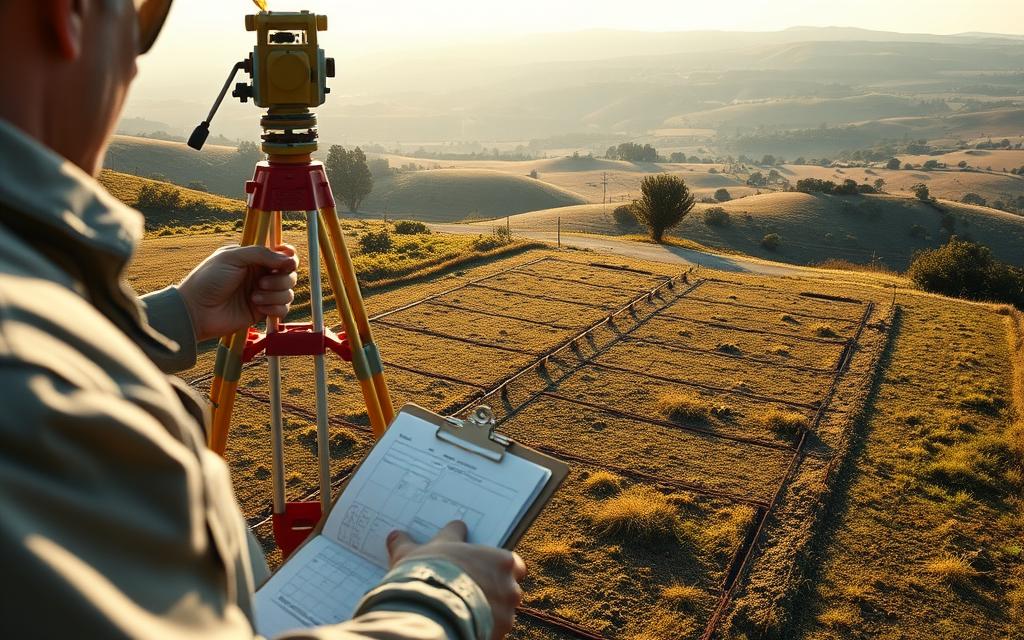
Surveys check land features, legal lines, and possible conflicts. Owners learn where their land is, helping them decide how to use it and avoid fights.
Understanding Property Surveys
Experts use new tech and legal papers to make accurate maps. These reports show:
- Exact property line measurements
- Boundary conflict signs
- How buildings relate to lines
- Land shape
When to Conduct a Property Survey
It’s smart to get a survey in these situations:
- Before buying a new place
- When planning to build or fix up
- If neighbors might be crossing lines
- In property line fights with neighbors
Resolving Disputes Through Surveys
Professional surveys offer clear, legal proof to solve land issues. They are key in legal fights or talks with neighbors.
Getting a detailed survey helps protect your land. It stops fights and makes sure you know your property lines.
Initial Steps When You Suspect Encroachment
Discovering a fence issue with your neighbor can be stressful. It’s important to know how to handle it. This helps keep good relations and protects your property.
When you see an encroachment, it’s key to act calmly and methodically. Start by documenting and talking to your neighbor.
Documenting Your Evidence
Getting solid evidence is the first step. Property owners should:
- Take clear photos of the issue
- Measure and mark the boundary lines
- Collect important property deed documents
- Write a detailed description of the problem
Communicating with Neighbors
Talking to your neighbor needs to be done with care. Open and respectful dialogue can stop problems before they get worse. Here are some tips:
- Set up a face-to-face meeting
- Bring your evidence
- Explain your concerns clearly
- Listen to their side
- Offer fair solutions
Seeking Mediation
If talking directly doesn’t work, mediation is a good next step. A neutral mediator can help find solutions without going to court.
Mediators are experts in solving property issues. They help find ways to fix problems that keep neighbors friendly.
Resolving Encroachment Issues Informally
Dealing with property encroachment doesn’t always need legal fights. Many disputes can be solved with good talks and working together. Knowing how to handle these issues can help homeowners deal with tricky neighbor problems.
Good communication is key to solving private property disputes. Homeowners should get ready before talking about encroachment issues.
Negotiation Techniques
Good negotiation means staying calm and polite. Here are some important tips:
- Schedule a face-to-face meeting in a neutral setting
- Bring documented evidence of property boundaries
- Listen to your neighbor’s perspective
- Remain respectful and solution-oriented
Drafting Written Agreements
When talks go well, making a written agreement is important. Professional documentation protects both parties’ interests and sets clear expectations for solving encroachment problems.
A good written agreement should have:
- Precise description of the encroachment
- Agreed-upon resolution method
- Timeline for implementation
- Signatures from both property owners
Importance of Good Neighbor Relations
Keeping good relations during disputes can lead to better solutions. Talk with empathy, knowing most encroachments are not on purpose. Focus on finding solutions that help everyone and keep the neighborhood friendly.
Taking Legal Action for Encroachment
Property disputes can get worse fast if neighbors can’t agree. Knowing your legal options is key when talks don’t work.
Legal steps should be last when all else fails. The law offers ways to protect your property.
When to Consider Legal Action
Think about legal steps in these cases:
- Repeated boundary violations
- Significant property damage
- Substantial financial loss
- Neighbor refuses to negotiate
Types of Legal Remedies
There are several legal outcomes for encroachment complaints:
- Injunctive Relief: Court order to stop the encroaching activity
- Monetary Damages: Compensation for property value reduction
- Property Line Adjustment: Legal redefinition of property boundaries
- Forced Removal: Removal of unauthorized structures
Hiring a Lawyer: What to Look For
Choose a real estate lawyer with boundary dispute experience. They should know local laws well and have solved cases before.
Look for someone who understands zoning, can negotiate well, and knows real estate law.
Understanding Adverse Possession

Property ownership can get tricky with legal ideas like adverse possession. Real estate law lets people claim property rights by using it for a long time.
Adverse possession is a complex idea. It lets someone get property rights by using land without permission. This idea changes how we think about owning property.
Core Requirements for Adverse Possession
To claim adverse possession, you need to meet a few key points:
- Continuous occupation of the property for a specific statutory period
- Open and notorious use of the land
- Exclusive possession without owner’s consent
- Actual physical presence and maintenance of the property
Legal Implications of Adverse Possession
Adverse possession laws vary by state. This makes it hard for property owners. Encroachment law real estate rules say owners must watch for unauthorized land use.
Owners should know that not stopping someone could mean losing their land. So, it’s key to manage property boundaries well.
Protecting Your Property Rights
To avoid adverse possession, watch your property lines closely. Keep records clear and deal with any trespasses fast. Doing regular surveys and talking to neighbors can help avoid problems.
The Role of Local Authorities in Encroachment
Land use disputes need local government help. They manage property lines and building rules. Property owners should know how local authorities can help with encroachment issues.
Local government agencies are key in solving building issues. They guide and enforce rules to keep the community safe and property rights intact.
When to Contact Local Government
Property owners should contact local authorities in certain situations:
- Structural boundaries cross property lines
- Neighbors build structures extending beyond legal limits
- Zoning regulation violations occur
- Public spaces are improperly occupied
Building Codes and Encroachment Impact
Local building codes are vital in stopping and fixing encroachment. They set clear rules for building and property use.
| Building Code Aspect | Encroachment Prevention Strategy |
|---|---|
| Setback Requirements | Defines minimum distance structures must be from property lines |
| Zoning Restrictions | Limits types of structures allowed in specific areas |
| Permit Processes | Ensures legal compliance before construction begins |
Neighborhood Associations and Community Impact
Neighborhood associations work with local authorities on encroachment issues. They offer extra help in solving property boundary disputes.
Knowing local government resources and rules helps property owners manage and prevent encroachment problems.
Dealing with Encroachment Disputes with Neighbors
Talking to a neighbor about a fence issue can be hard and stressful. Property lines often cause problems between neighbors. It’s key to talk things out to avoid fights.

When you have a problem with your neighbor, getting help is important. Here are some ways to solve issues without fighting:
- Gather proof of the problem
- Talk to your neighbor nicely
- Offer good solutions
- Stay calm and polite
Effective Communication Strategies
Good communication is the first step to solving problems. Here’s how to start:
- Meet your neighbor face-to-face
- Bring documents like surveys
- Listen to what they say
- Find solutions that work for both
Possible Outcomes of Dispute Resolution
There are different ways to solve property line issues. You might:
- Make an agreement to change how you use the land
- Get money for the problem
- Move the property line a little
- Go to court if talking doesn’t work
Building Community Goodwill
Keeping good relations with your neighbors is very important. Try to solve problems together. This way, everyone wins and the neighborhood stays friendly.
Navigating Insurance Issues Related to Encroachment
Homeowners face big insurance challenges when property rights are violated. It’s key to know how encroachment law affects insurance policies. This helps protect your home and money.
Encroachment can lead to insurance problems. Boundary disputes can change your homeowners insurance. This might affect your premiums.
Homeowners Insurance and Possible Risks
When dealing with encroachment insurance, consider these points:
- Potential liability for structures crossing property lines
- Risk of injury on disputed property areas
- Possible increased insurance premiums
- Coverage limitations for boundary disputes
Filing Claims for Encroachment Damages
Insurance claims for encroachment are complex. Documentation is very important when you file a claim for property boundary issues.
Here’s how to file a claim:
- Gather lots of photos as evidence
- Get a professional property survey
- Tell your insurance provider all the details
- Keep records of all talks
Importance of Complete Coverage
It’s smart to plan ahead for insurance. Talk to an insurance expert who knows about real estate. They can help you get the right coverage for encroachment issues.
Long-term Solutions to Prevent Future Encroachments
To keep your property safe from land encroachment, you need a good plan. Property owners must have a solid strategy to protect their rights and keep their property lines clear.
Stopping land encroachment takes more than one step. It’s about keeping control and knowing where your property ends. Knowing these steps can really help avoid problems with property rights.
Establishing Clear Property Boundaries
It’s very important to have clear property lines to stop encroachment. Here are some important steps:
- Get professional land surveys every few years
- Put up clear boundary markers or fences
- Keep your property documents up to date
- Know the local zoning laws
Maintaining Positive Neighbor Relations
Talking openly is key to avoiding encroachment problems. Be respectful and clear when talking about property lines:
- Have friendly talks about property lines
- Share survey documents nicely
- Talk about any building or landscaping plans
- Keep records of all talks
Enforcing Property Rights Effectively
If you face an encroachment issue, act quickly but also be kind. Keeping good records of any disputes helps protect your rights and shows you manage your property well.
Being proactive and talking clearly are your strongest defenses against land encroachment problems.
The Impact of Encroachment on Property Values
Real property conflicts can really hurt a property’s value. When there are issues with encroachment, buyers get worried. They don’t want to buy a place with boundary problems.
Encroachment makes selling hard for property owners. If there are boundary issues, it makes the property less appealing. Buyers don’t want to deal with these problems.
How Encroachment Diminishes Market Value
- Reduces property marketability
- Creates legal uncertainty for buyers
- Potentially lowers appraisal values
- Increases perceived risk of ownership
Managing Property Value Perception
Managing property boundaries well keeps the value up. Buyers want clear property lines. They don’t want legal troubles later.
| Encroachment Impact | Potential Value Reduction |
|---|---|
| Minor boundary issue | 3-5% value decrease |
| Significant property rights violation | 10-15% value decrease |
| Unresolved legal dispute | Up to 20% value reduction |
Strategies for Mitigating Value Loss
- Conduct professional property surveys
- Resolve boundary disputes before selling
- Document all communication and agreements
- Obtain legal documentation of property lines
Fixing encroachment problems fast helps keep your property’s value up. Clear talks and legal fixes are important for keeping your property’s worth.
Case Studies of Successful Encroachment Resolutions
Property disputes can get very complicated. Real cases show us how to solve these problems. They teach us how to handle property issues.
Mediation Success in Suburban Property Dispute
In California, mediation helped solve a big problem. Two neighbors in Sacramento had a fight over a fence. They found a way to fix it through several steps:
- They got a professional to check the property lines.
- They used a neutral person to talk things out.
- They came up with a plan that worked for both sides.
Landmark Court Case: Property Rights Vindicated
In Texas, a homeowner won a big case against a neighbor. The neighbor built a garage without permission. The court case showed the power of proof and good arguments.
| Legal Action Step | Outcome |
|---|---|
| Professional Survey | Confirmed property line violation |
| Legal Filing | Injunction granted |
| Forced Removal | Garage extension dismantled |
Key Lessons Learned
These cases teach us important lessons:
- Keep detailed records of everything.
- Talk to your neighbors in a kind way.
- Try mediation before going to court.
- Get help from a lawyer when you need it.
Being proactive and keeping clear records are key to solving property disputes.
Resources and Tools for Property Owners
Handling land use disputes and property encroachment can be tough. Property owners have many resources to help manage and solve these problems. Knowing the right tools and support can protect your property rights well.
When facing encroachment issues, several key resources can offer important help:
Online Property Mapping Resources
Digital tools have changed how we find property boundaries. Now, property owners can use online mapping services to check land boundaries:
- County GIS (Geographic Information System) websites
- Google Earth Pro for satellite imagery
- Professional online property mapping platforms
Local Legal Aid Organizations
Legal help is key when writing an encroachment letter or legal notice. Here are some local resources:
- State bar association referral services
- Pro bono legal clinics
- Community legal assistance centers
Community Mediation Services
Not all disputes need to go to court. Community mediation helps solve problems together:
- Local conflict resolution centers
- Professional mediation services
- Neighborhood dispute resolution programs
Using these resources, property owners can face encroachment challenges with confidence and support.
Conclusion: Protecting Your Property Rights
Knowing how to handle encroachment issues is key to keeping your property safe. Property owners need to act fast to stop bigger problems later. They must use a smart plan that mixes knowing the law with talking things out.
When a property rights issue comes up, start by collecting proof and knowing your rights. A good guide says to talk first, get a survey, and keep records. These steps help fix problems and keep good relations with neighbors.
The best way is to mix knowing the law with solving problems. Stay ahead by getting help when needed and knowing your rights. Quick and smart action helps keep your property value up and avoids big troubles.
Protecting your property rights takes time, keeping records, and knowing local laws. You can use talks, negotiations, or lawsuits to solve encroachment problems. The main thing is to be careful, communicate well, and look for solutions that work for everyone.






Leave a Reply