

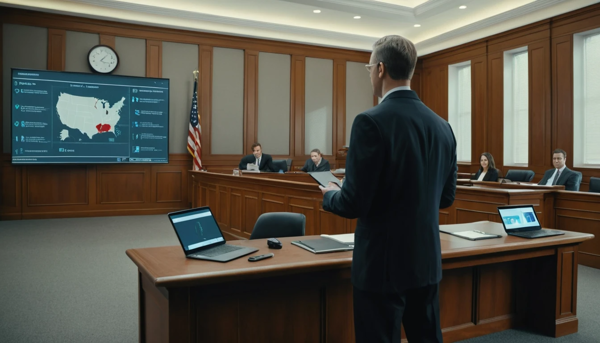
How injury law is evolving in the age of digital evidence with smart tech, better case wins, and faster settlements for victims seeking justice today.
In Louisiana’s Acadiana region, parishes like Lafayette, Calcasieu, Acadia, and St. Landry are witnessing a troubling rise in serious injuries tied to traffic collisions, workplace accidents, and industrial hazards. According to recent data from the Louisiana Department of Health, unintentional injuries remain one of the leading causes of hospitalization and death across the state, with over 6,000 injury-related fatalities reported annually.
As these numbers continue to climb, the pressure on local courts and injury law professionals intensifies, especially in communities that span both urban centers and rural landscapes. Families in these parishes often face the dual burden of physical recovery and navigating complex legal systems in the aftermath of trauma.
This evolving landscape has brought a new urgency to how injury law is practiced. Galloway Jefcoat, LLP, a firm rooted in serving Louisiana, recognizes that the rise of digital evidence is transforming everything from accident reconstruction to courtroom strategy. From dashcam footage and surveillance video to social media posts and smartphone metadata, digital proof now plays a central role in personal injury claims. For victims seeking justice, this shift means more opportunities to prove liability, but it also requires legal teams to stay ahead of fast-changing technology.
Table of Contents
The Rise of Digital Evidence
Digital evidence includes records from social media posts, email, text messages, and surveillance footage. These factors have been key in personal injury cases. They provide real-time data from what was historically an opaque black box, providing clarity about events that were once only unfairly misunderstood. Setting this information by circumstance and in a mode that convinces a judge can play a large factor in whether a case stands on its own.
Impact on Case Preparation
Digital evidence has redefined how attorneys prepare for cases. Collecting electronic data involves a separate set of skills and expertise. Legal teams need not just data, but the right data that is verified as coming from the right source. Such a shift requires a different approach: a fusion of traditional legal skills and fluency in the digital sphere.
Challenges in Admissibility
Digital evidence has opened new doors, but it has also brought about some challenges. It is critical to ensure this type of evidence is preserved and admissible. To be admissible before a court, digital information has to meet two conditions: it has to be relevant and reliable. This requires, for example, identifying the origin of the data and proving that it has not been manipulated. This requires legal practitioners to overcome these obstacles so that digital evidence can find a proper place in their arguments.
Privacy Concerns
In this era of digital information, privacy concerns have become quite common. Accessing personal data falls under a legal and ethical gray area. Attorneys are often faced with balancing the need for evidence against the need to respect the rights of individuals to their privacy. This creates challenging scenarios where some may contend that the information is too valuable to ignore even though it compromises privacy, disregarding the implications.
The Role of Forensic Experts
Forensic analysts play a fundamental part in the digital evidence. They provide expertise in verifying data and what it means. They can track digital footprints, offering insights that would otherwise fall through the cracks. They play an important part in keeping the electronic evidence relevant to the case and credible at the same time.
Influence on Settlements and Verdicts
Digital evidence can also affect verdicts and settlements. Strong, clear evidence often ends litigation sooner, as parties are more willing to settle than risk being on the losing end of a trial. Digital evidence, presented in a way that is easy to understand, can be powerful in court, providing real-world context to juries. This helps make better decisions with less bias.
Adapting Legal Education
Evidence in law is changing and reshaping legal education. To prepare future lawyers, law schools are making technology-centered course offerings. Digital evidence is a basic part of life, and legal training is evolving and starting to reflect that. This transition prepares new practitioners to meet the challenges of contemporary legal practice.
Ethical Considerations
Moreover, the utilization of digital evidence also creates ethical dilemmas. Lawyers have to walk a tightrope between zealous representation and professional integrity. This involves refraining from the urge to fake digital data. It is very important to preserve the integrity of digital evidence. Otherwise, any unethical actions taken by the attorney can undermine the credibility of both the attorney and the evidence presented.
Future Implications
With technology continuing to grow, it is likely that digital evidence will play an even greater role in injury law. Future technologies, including artificial intelligence and ever more sophisticated surveillance systems, could transform this dynamic even more. The practicing attorney needs to be vigilant of these developments and have the ability to navigate the changes to better serve the clientele. Continuing to move with these changes will be necessary for future expediency.
To Sum Up
The incorporation of digital evidence into injury law is a paradigm shift in case practice. The role includes a combination of traditional legal skills and an understanding of modern technology. The legal world needs to accept these changes to provide better accuracy and maintain fairness.
With the growing importance of digital evidence, the rise of cyber forensics, and the advances in technology as seen in Supreme Court of the United States (SCOTUS) updates.
Thus, it is clear that everyone involved in the process of law, from the legal practitioners to the people seeking justice, must keep abreast of the changes and adapt to the changes.

FAQs: How Injury Law Is Evolving
1. How is digital evidence used in injury law?
Digital evidence like dashcam videos and texts proves what happened in accidents. Lawyers use this to build stronger cases. It makes claims more accurate and clear.
2. Can social media be used in injury claims?
Yes, social media posts can help or hurt your case. They may show what really happened or reveal contradictions. Lawyers often review them during investigations.
3. Why is digital evidence important in court?
Digital proof gives judges and juries a clearer picture of events. It’s often more reliable than witness memory. It helps with fair decisions and faster settlements.
4. Are there privacy issues with digital evidence?
Yes, accessing someone’s digital data must follow legal rules. Attorneys must balance evidence needs with personal rights. This often leads to ethical decisions in court.
5. How do forensic experts help injury lawyers?
Forensic analysts verify the source and accuracy of data. They explain how digital evidence supports a claim. Their input often strengthens the case in court.





Leave a Reply