


What if you could protect your rights and secure your future without draining your savings? For many seniors, navigating complex legal matters like estate planning or Medicaid applications feels overwhelming. Yet specialized guidance exists to help you make informed decisions—often at no cost.
Legal challenges related to aging require expertise. Issues like advance directives, fraud prevention, and asset protection demand tailored solutions. Organizations such as Legal Services Corporation and LawHelp.org bridge the gap, connecting older adults with professionals who understand their unique needs.
These programs prioritize accessibility. Whether you need help drafting a living will or resolving disputes over power of attorney, free consultations and low-cost services are available. This ensures financial limitations don’t block access to justice.
Proper legal support empowers seniors to safeguard their interests. From personalized estate planning to advocating for fair treatment, expert advice transforms confusion into clarity. Resources like AARP’s Fraud Resource Center and LegalZoom further simplify the process, offering tools to navigate the system confidently.
Table of Contents
Key Takeaways
- Programs like Legal Services Corporation provide no-cost legal aid for seniors.
- Elder law covers critical areas like Medicaid planning, fraud prevention, and estate management.
- Free consultations help clarify options for advance directives or power of attorney.
- Legal guidance ensures rights are protected in complex situations.
- Trusted platforms like LawHelp.org simplify finding local support.
Understanding Elder Law and Its Importance
Navigating the complexities of aging involves more than health concerns—it’s about safeguarding rights through specialized legal services. This field addresses unique challenges older adults face, ensuring fairness in critical areas like housing stability and financial security.
What Does This Practice Cover?
These services span family disputes, estate planning, and consumer protection. For example, professionals help draft wills, resolve guardianship questions, or challenge unfair debt collection. Medicaid eligibility and long-term care planning also fall under this umbrella.
Tailored Support for Daily Needs
Many programs focus on housing rights and income access. Seniors facing eviction or predatory leasing terms can get assistance to negotiate fair solutions. Others receive guidance on accessing healthcare benefits or managing government aid.
Consumer issues, like scams targeting retirees, are prioritized. Advocates educate clients on spotting fraud and recovering losses. Combined, these services create a safety net that adapts to individual circumstances.
Understanding available legal services empowers older adults to protect their independence. Whether addressing tenant conflicts or securing future care plans, tailored assistance turns overwhelming challenges into manageable steps.
Finding a free elder law attorney near me: What to Look For
Choosing the right professional for aging-related legal issues requires careful research. Prioritize experts with certifications from groups like the National Academy of Elder Law Attorneys. These credentials show deep knowledge of Medicaid rules, estate planning, and consumer protection laws.
Key Qualifications and Expertise
Look for professionals experienced in handling rights disputes and complex cases. For example, some specialize in reversing wrongful evictions or fighting predatory lending. State bar associations, like New Jersey’s, provide records to verify standing and disciplinary history.
Organizations such as Central Jersey Legal Services train staff on regional regulations. This ensures they can address local issues, from public benefit denials to guardianship conflicts. Always ask about their success rate with cases similar to yours.
Evaluating Service Offerings and Client Support
Strong advocacy programs pair legal help with education. Northeast New Jersey Legal Services, for instance, offers workshops on spotting scams while assisting with paperwork. Confirm whether the program provides multilingual support or accommodates disabilities.
Check if income requirements align with your situation. Many groups use sliding scales for those slightly above poverty thresholds. Client reviews and referral networks—like AARP’s directory—help gauge responsiveness and reliability.
Navigating Legal Aid Programs for Older Adults
Federal and local initiatives exist to empower seniors facing complex legal challenges. Programs like NYC Aging’s Legal Services connect older adults with representation for housing stability and benefit access. These resources prioritize critical needs such as health care advocacy and property rights protection.
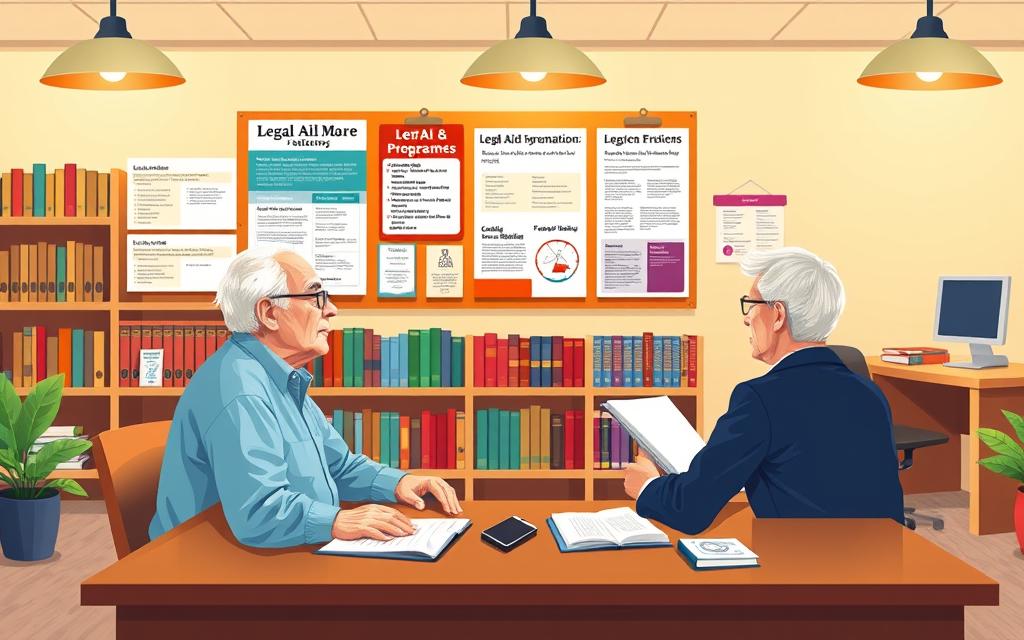
Federal and Local Programs Overview
Organizations like Legal Services of North Dakota (LSND) offer free legal services for low-income seniors. Their focus includes resolving disputes over public benefits and drafting advance directives. Similarly, Legal Aid of East Tennessee assists those 60+ with property conflicts and eviction defense.
NYC Aging’s initiative provides direct help with denied health care claims or unfair lease terms. Many programs use sliding scales, ensuring affordability regardless of fixed income levels. This approach removes barriers to justice for vulnerable populations.
How Legal Aid Can Address Financial and Housing Issues
Legal teams tackle income-related hurdles by appealing wrongful benefit denials. For example, LAET helps recover lost pensions or Social Security payments. Housing advocates also negotiate repairs, prevent wrongful evictions, and combat predatory rent increases.
Disputes over home ownership or inheritance rights find resolution through property law specialists. Many programs pair legal action with education, teaching seniors to spot scams targeting their assets. This dual strategy strengthens long-term health care and financial security.
Accessing Free Legal Advice for Elder Care Needs
Many older adults delay addressing care-related problems due to uncertainty about where to begin. Specialized programs simplify this process through structured pathways to professional guidance.
Steps to Get Started with Legal Consultations
Begin by contacting organizations like Legal Counsel for the Elderly. These groups assess eligibility based on income and care needs. For example, the Eldercare Locator matches adults with local services using zip codes.
Next, prepare essential documents. Proof of income, medical records, and existing legal paperwork help attorneys evaluate your case efficiently. Many programs offer phone screenings to prioritize urgent problems like eviction risks or benefit denials.
Understanding the Benefits of No-Cost Legal Services
Early consultations often prevent costly disputes. A lawyer might spot errors in a lease agreement or identify Medicaid planning gaps—saving clients thousands in potential losses. Pro bono services also clarify complex processes, such as appointing a healthcare proxy.
Platforms like LawHelp.org connect adults with volunteer attorneys for targeted advice. This proactive approach reduces stress and empowers seniors to make informed decisions about care arrangements or asset protection.
Direct access to experts transforms abstract problems into actionable solutions. Whether updating a will or contesting unfair charges, timely guidance ensures clients maintain control over their futures.
Assisting with Housing, Tenant, and Property Disputes
Disputes over housing and property can disrupt the stability many seniors rely on. Whether facing unexpected evictions or deceptive leasing terms, older adults often need legal guidance to protect their rights. Specialized programs focus on resolving conflicts while preventing financial exploitation.

Resources for Landlord-Tenant Disputes
Common issues include wrongful evictions, unsafe living conditions, or sudden rent hikes. Groups like the Senior Legal Hotline offer direct support—helping tenants understand lease agreements or contest illegal actions. For example, California’s Dispute Resolution Service mediates conflicts without court involvement.
Legal Services of Northern California assists with eviction defense, ensuring seniors aren’t displaced unfairly. They also address landlord tenant disagreements over security deposits or maintenance neglect. Proactive advice often prevents minor issues from escalating.
Protecting Consumer and Property Rights
Scams targeting seniors—like fake home repairs—require swift action. Advocacy groups help recover losses and strengthen property rights. In Solano County, programs educate homeowners on spotting fraudulent contractors or predatory lending terms.
Foreclosure prevention is another priority. Legal experts review mortgage terms and negotiate alternatives to keep seniors in their homes. For those seeking housing rights assistance, local law libraries provide self-help tools to navigate complex paperwork independently.
By combining education with direct advocacy, these services empower older adults to safeguard their homes and financial well-being.
Supporting Estate Planning, Guardianship, and Abuse Prevention
Proper estate planning acts as a shield against financial exploitation while preserving personal wishes. Clear legal documents prevent family conflicts and ensure assets reach intended beneficiaries. Abuse prevention starts with structured plans that leave no room for manipulation.

Securing Assets Through Legal Tools
Wills and trusts form the foundation of retirement security. A will outlines asset distribution, while trusts offer tax benefits and avoid probate delays. Powers of attorney designate trusted individuals to manage finances or healthcare if incapacitated.
| Document | Purpose | Key Benefit |
|---|---|---|
| Will | Asset distribution | Prevents state-directed inheritance |
| Trust | Tax efficiency | Bypasses lengthy probate |
| Power of Attorney | Decision delegation | Maintains control during incapacity |
Guardianship cases require careful oversight to prevent neglect. Courts appoint representatives only after verifying incapacity and reviewing medical evidence. Legal advocates challenge fraudulent petitions, protecting seniors from unnecessary loss of autonomy.
Regular updates to estate plans adapt to life changes like marriages or new grandchildren. Consulting professionals ensures documents comply with state laws. Firms like Peck Ritchey combine representation with education, teaching clients to spot red flags in care facilities.
Combating abuse involves both legal action and preventive measures. Structured retirement plans and vigilant guardianship oversight create layers of protection. This proactive approach secures legacies while honoring personal values.
Leveraging Volunteer Programs and Community Resources
Communities play a vital role in ensuring seniors receive the legal help they deserve. Grassroots initiatives and national networks work together to address gaps in support. By tapping into these resources, older adults gain access to expertise that protects their rights and dignity.
Roles of Community-Based Legal Initiatives
Local programs often rely on volunteer attorneys to handle cases like housing disputes or benefit appeals. For example, Legal Counsel for the Elderly trains people to assist with Medicare denials or predatory lending issues. These efforts build trust while resolving urgent problems.
In Boston, the Access to Justice Fellows Program pairs retired lawyers with seniors facing eviction. Similar projects help veterans navigate VA benefits or update estate plans. This hands-on approach ensures no one faces complex systems alone.
Opportunities with National and Local Organizations
Groups like AARP mobilize volunteer networks to educate older adults about scam prevention. Their Fraud Watch Network alerts people to emerging threats while offering personalized legal guidance. Regional alliances, such as California’s Senior Legal Hotline, provide phone consultations for rural residents.
Nonprofits also collaborate with law schools. Students supervised by licensed attorneys help veterans discharge unfair debts or secure stable housing. These partnerships expand services without straining limited budgets.
By engaging people at all levels, communities create safety nets that adapt to evolving needs. From neighborhood workshops to nationwide hotlines, collective support empowers seniors to live with confidence.
Conclusion
Legal guidance transforms uncertainty into confidence for seniors managing critical life decisions. Throughout this article, we’ve explored how tailored advice addresses health care access, home stability, and financial security. These services empower older adults to protect their independence while avoiding costly mistakes.
Professional support helps navigate complex systems—whether securing Medicaid benefits or preventing wrongful evictions. For example, over 101,000 seniors reported fraud in 2023, underscoring the need for proactive planning. Tools like advance directives and trusts shield assets from exploitation or bankruptcy risks.
Prioritizing health and home rights ensures stability during retirement. Organizations like AARP’s Fraud Watch Network offer resources to spot scams early. Similarly, LegalZoom provides affordable options for drafting essential documents.
Take action today. Explore local programs or national hotlines to address your unique needs. With the right advice, you can secure your future and focus on what matters most—living with dignity and peace of mind.



Leave a Reply